

The job is done and the customer is happy. All that is left is sending the invoice. And that is often where things stall. One contractor told us straight up:
"I'm often behind on my invoices because I have to do them at night, with the kids around. Almost a month behind."
A late invoice is money sitting idle. An incomplete one is worse: a commercial customer can push it back, and it can create headaches at tax time. Here is what to put on a construction invoice, how to handle sales tax, and how to get paid faster.
What to include on a construction invoice
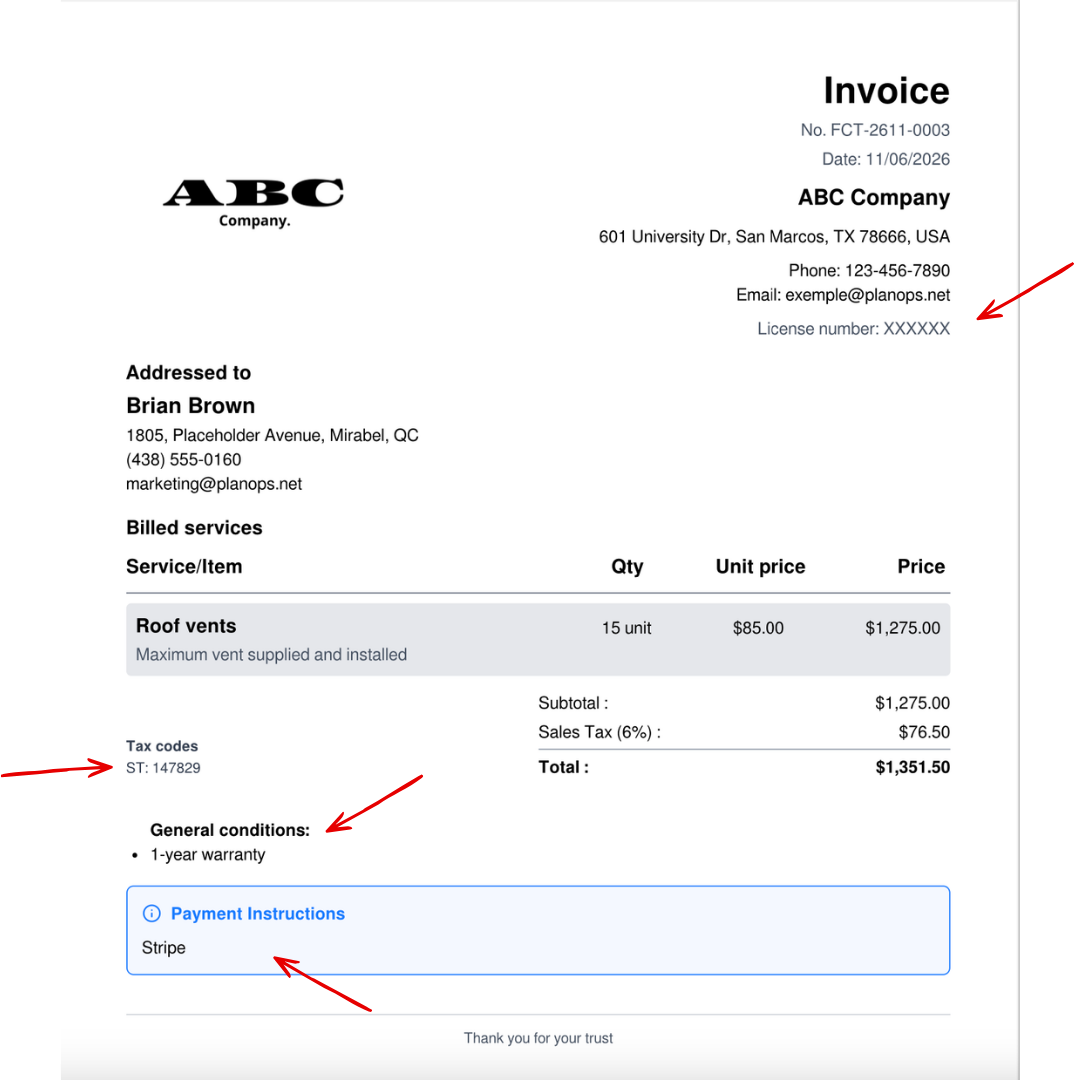
A good invoice answers every question before the customer asks it. Here is what it should contain.
Your business info and license number. Your company name, address and phone number. If your state or city requires a contractor license for the work, include the license number too. Some licensing boards require it on contracts and invoices, so check your state's rules.
A unique invoice number and the date. Number your invoices in order, with no gaps. It keeps your books clean and makes follow-ups easier.
The customer's info and the job address. Especially if the customer owns several properties or is a business.
A description of the work. What was done, quantities and the price of each line item. The clearer it is, the fewer calls you get asking "what's this line for?"
Subtotal, sales tax (if any) and total. Show tax on its own line when it applies.
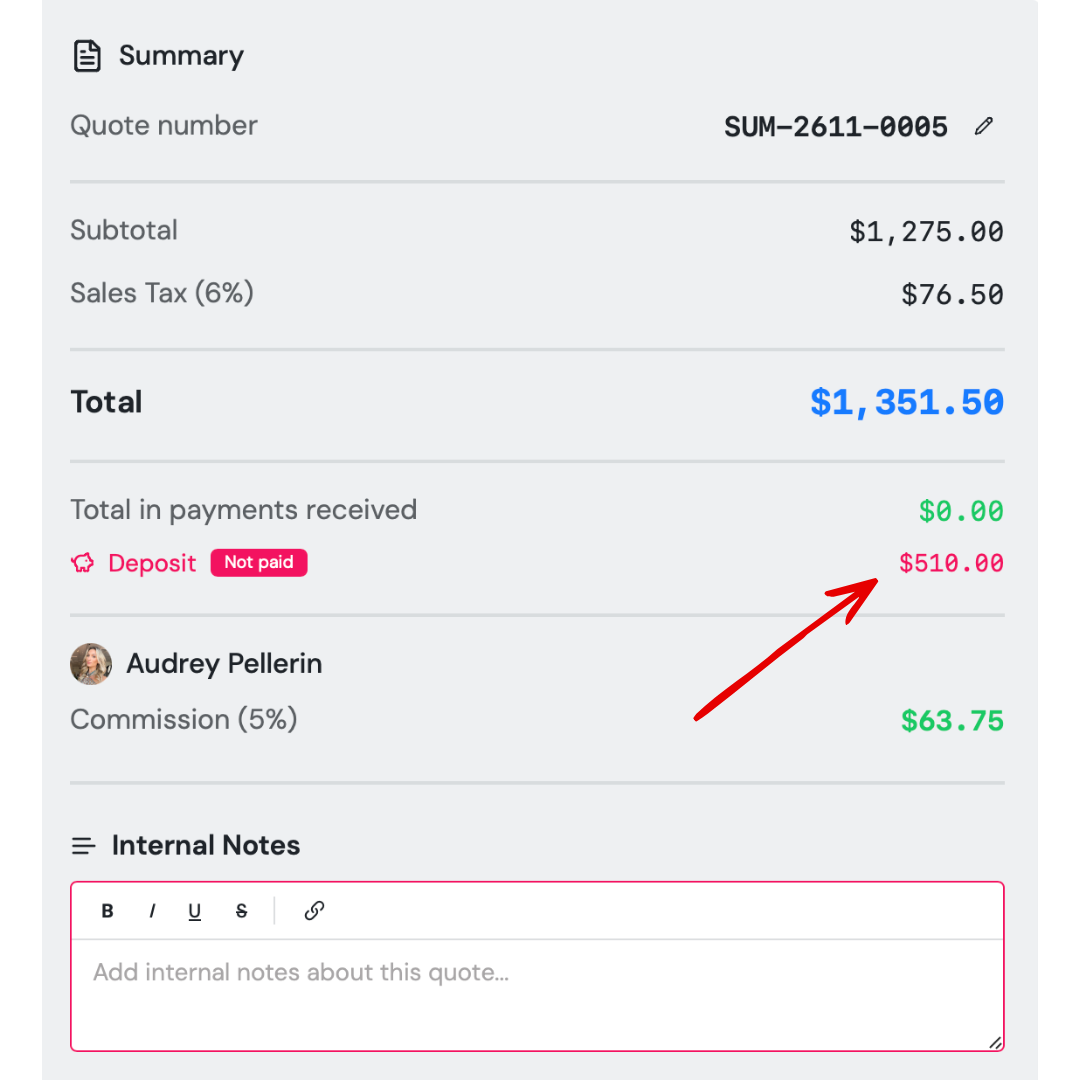
Deposits received and balance due. If the customer paid a deposit when signing, show it so they clearly see what is left to pay.
Payment terms. The due date and the payment methods you accept (check, ACH, credit card).
Sales tax on construction: it depends on your state
Unlike Canada, the US has no national sales tax. Each state decides whether construction labor and materials are taxable, and the rules can change depending on the type of job.
Texas is a good example. According to the Texas Comptroller, labor to repair, remodel or restore residential real property is not taxable. But for nonresidential property, the total amount charged for remodeling, repairing or restoring is taxable, and the contractor should collect state and local sales tax on the total charge for the job.
In other words, the same remodel can be taxable or not depending on whether it is a house or a store. If you are not sure how your state treats your work, ask your accountant before you send your first invoice of the season.
Final invoice, deposit or progress billing?
For a small job, one invoice at the end works fine. For a project that runs several weeks, waiting until the end to bill means financing your customer's project with your own money.
The two most common practices: ask for a deposit when the estimate is signed, then bill in stages (for example after demo, after framing, at completion). Spell out those stages in the estimate. The customer knows what to expect, and your cash flow stays healthy.
Put your terms and conditions in the estimate
An invoice goes smoothly when everything was said before the work started. That is why many contractors add their terms right into the estimate. Take a painting company: once the paint has been ordered and tinted, it cannot be returned. If the homeowner changes their mind about the color, there is a fee. If that is written in the estimate they signed, the conversation is settled ahead of time.
Here are the terms we see most often:
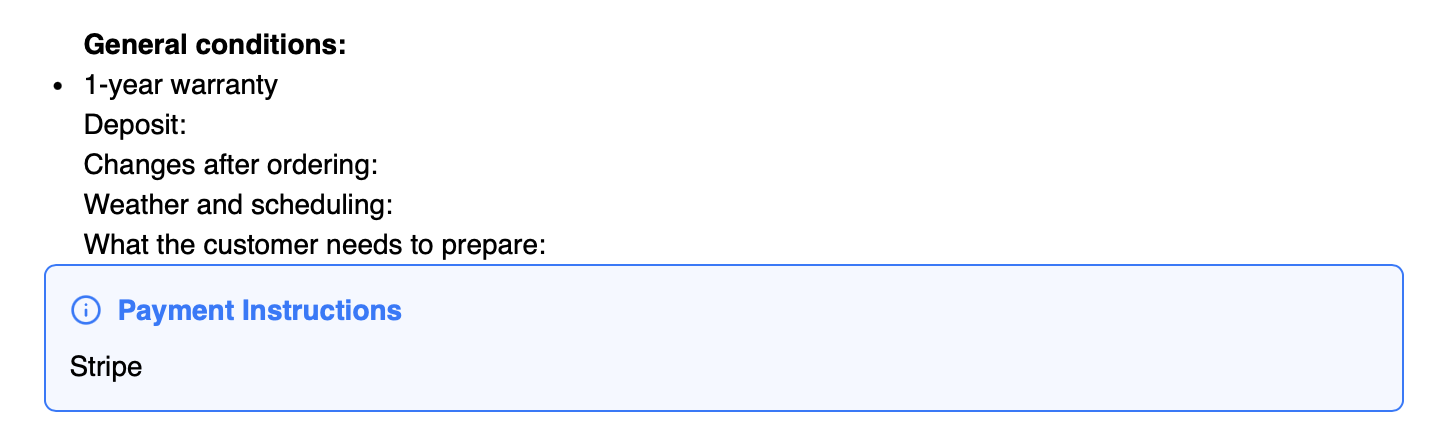
Deposit: how much, when it is due and whether it is refundable.
Changes after ordering: colors, models or special-order materials already purchased come with a fee.
Change orders: any work not in the estimate must be added in writing and approved by the customer before it is done.
Weather and scheduling: exterior work may be rescheduled when it rains, and dates are estimates.
What the customer needs to prepare: moving furniture, clearing the driveway, access to water and power.
Warranty: what is covered, and for how long.
Payment: the payment schedule, accepted payment methods and late fees.
When the customer signs the estimate, they also accept these terms. If there is a disagreement when it is time to invoice, you have a clear document to point to. For terms that truly protect your business, have a lawyer review them once, then reuse them on every estimate.
The mistakes that slow down your payments
Invoicing late. The later the invoice shows up, the more the customer puts it off. One service contractor told us he spent "two, three hours every weekend" doing his invoicing. That is time you are not spending on jobs or with your family.
Retyping the estimate. When the invoice is rebuilt by hand from the estimate, mistakes creep in: a missing quantity, an unbilled change order, a tax miscalculation.
Forgetting change orders. The customer asked you to add the shed halfway through? If it is not in the job file, it may never get billed.
Not following up. An invoice that has been opened but not paid deserves a polite reminder after a few days. Without a system, it slips.
Making payment hard. If the only way to pay you is a check in the mail, expect to wait.
How to get paid faster
Send the invoice the day the work is done, while the customer is still looking at the result. Add an online payment link so they can pay by card in two clicks. And follow up every time an invoice has been opened but not paid.
To stay on top of every customer from estimate to payment, our article on CRMs for contractors explains how to stop letting things slip through the cracks.
Invoice in a few clicks with PlanOps
In PlanOps, the invoice is created straight from the accepted estimate, whether or not you built it with remote measuring. Your business info, logo and the deposit received are already on it. Change orders added to the job flow into the invoice. And your terms, like your warranty document, are built into your estimate template once: the customer sees them and accepts them when they sign.
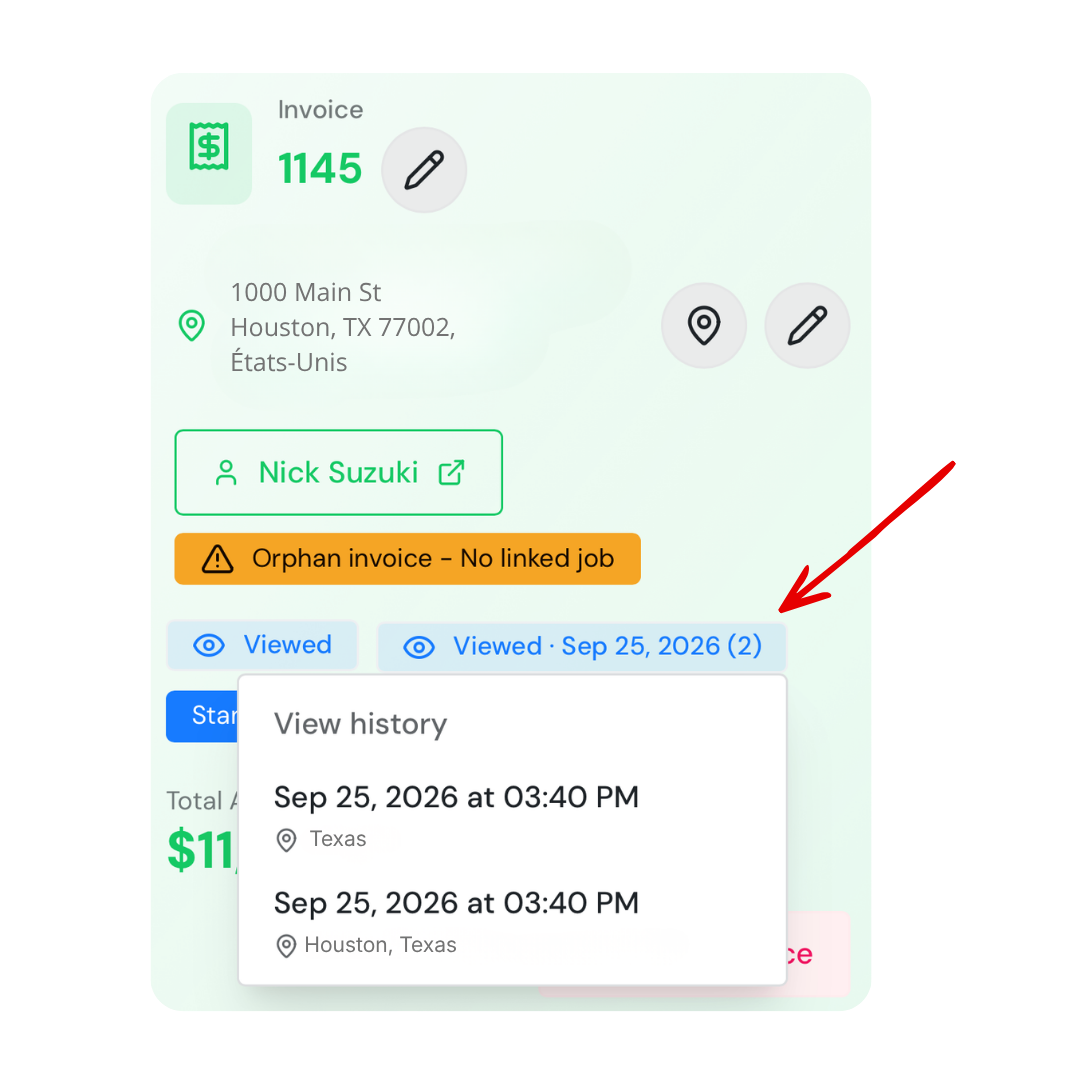
You send it by email, get notified when the customer opens it, and they can pay by card with the included link. The invoice then syncs with QuickBooks for your bookkeeper. And for reminders, you can simply ask Chloé, the built-in AI assistant, to text a follow-up to every customer who has opened their invoice but not paid it yet.
More than 350 businesses use PlanOps. During onboarding, our team sets up your estimate and invoice templates with you.
Frequently asked questions
Do I need to charge sales tax on construction work?
It depends on your state and the type of job. In Texas, for example, residential repair and remodeling labor is not taxable, while nonresidential repair and remodeling is. Check your state's rules or ask your accountant.
Should my license number be on my invoices?
If your state or city licenses your trade, it is a good habit, and some licensing boards require it on contracts and invoices. Check with your licensing board.
What is the difference between an estimate and an invoice?
An estimate is the price you propose before the work. An invoice is the request for payment once the work, or a stage of it, is done. Ideally, the invoice comes straight from the accepted estimate, with change orders added.
What payment terms should I use?
That is up to you, as long as it is written on the invoice. For homeowners, many contractors ask for payment on receipt. For commercial customers, Net 30 is common.
Can customers pay a construction invoice by credit card?
Yes, if you offer it. An online payment link on the invoice is one of the easiest ways to get paid faster. Card processing fees apply, so factor them into your pricing.